Tuesday, August 2, 2011

Stan Dimmick - Structurally Insulated Panels

Stan Dimmick, the President of Korwall Industies, Inc., has been touting the virtues of structurally insulated panels, or SIPs, since 1958.  He has weathered the storm of criticism against the use of SIPs as nothing more than a cheap, experimental building material to be used for mobile homes, to the painfully slow acceptance of the use of SIPs as a legitimate building system, offering clear advantages to traditional “sticks and bricks” construction.  
The origins of the first SIP dates back to the 1930’s when engineers from Forest Products Laboratory (FLP) in Madison, Wisconsin theorized that by sandwiching insulation between two boards or skins and adding additional framing, you could pre-make panels for construction to be used as load bearing walls.  The first prototype was created and  for the next 30 years SIPs were manufactured and sold in the marketplace.  


Frank Lloyd Wright was one of the first known architects to use SIPs on his Usonian houses, and in the early 1950’s one of Wright’s students, the son of the founder of Dow Chemicals, decided to use Styrofoam between the skins resulting in the first foam core panel.

                                                         Usonian House

Stan Dimmick and his partner jumped into the foam panel market in the late 50’s by manufacturing lightweight sandwich panels with a honeycomb core and plywood skin for the mobile home industry.  Over the next 20 years the building industry changed, and by 1973 the Korwall product had evolved into a panel made of “two layers of wafer board laminated under pressure to a core of expanded polystyrene (foam).”  The trademarked Korwall, Korfloor and Kor-Roof products are in use today for residential and commercial applications. 
Korwall invested a great deal of time and money in the testing of its SIPs including the hiring of an engineer to administer a number of structural integrity, load bearing and durability tests, and to submit all findings and data to a several  professional groups including the Council of American Building Officials (CABO) in an effort to help satisfy any reservations about using SIPs for construction.   With the help of believers like Stan who have stayed the course of their convictions, the building industry began to embrace the use of SIPs as an alternative construction material.   


Some of the Benefits of SIPs:
Two to five times stronger than conventional materials
Continued savings on heating and cooling cost
Lifetime warranty (offered by Korwall)
Easy to construct, short learning curve
40% shorter construction time, less labor cost
50% less framing results in lower cost on materials
Less construction waste
Minimal thermal loss for added indoor comfort and moisture control

Stan says that it has taken him 44 years to get the “attention of home buyers and architects” about the benefits and legitimacy of SIPs.  Some might say the industry has finally caught up to Stan.  With a growing awareness in some of the key principals outlined in the LEED rating system, such as, energy efficiency, reduced waste and building materials, durability and maintenance, today’s homeowner is more savvy about the “true cost” of homeownership and is interested in making the right choice in building materials for the life of the home not just the construction of the home.      
Stan understands this growing awareness, and while his story is now told to a more receptive audience, he has been a pioneer in the SIPs industry for years and an inspiration to others interested in sustainability.  For those who believe in the people and businesses that are conscientious about their work and their impact on the world, we owe Stan a debt of gratitude for being a visionary who stayed the course. 


Korwall Industries, Inc: http://www.korwall.com/SIPs/PanelHomes/Default.htm
Structurally Insulated Panel Associations (SIPA) - http://www.sips.org/


Friday, July 29, 2011

Got Water?

Like many parts of the US, Tucson, Arizona has been faced with water shortages and concerns about adequate water supply for over 25 years.  The city has implemented a number of water conservation strategies aimed at addressing the challenge.  Water in short supply is a way of life in Tucson, so in October of 2008, it was no real surprise when the city council took a more aggressive stance and enacted the first  “Commercial Rainwater Harvesting Ordinance,” in the nation.  The ordinance requires commercial facilities to provide 50% of their landscape watering needs by a rainwater harvesting system.   
Tucson also limited the restriction on water use to residents and business by codifying a number of other water conserving strategies into law, including ordinances for emergency water conservation, residential gray water, water waste, xeriscaping and  enhanced plumbing codes.

Tucson is but one city that has had to make radical decisions, ordinances and laws concerning water conservation.   This growing awareness has becoming more common as the understanding that demand for water is outpacing supply.    Water conservation and awareness is definitely an important first step in the journey towards more efficient use of water, but we must take our knowledge a step further if we are going to make a measurable difference.    
Mike Reed is a landscaping and rainwater harvesting specialists with Whiz-Q Stone in Ft. Worth.  He represents a number of rainwater harvesting systems that range in size and cost and are appropriate for the homeowner, large commercial client, or municipality.  Designs include rain barrels, plastic tanks, matrix systems (adaptable water catchment building blocks), metal tanks and what he calls “show-off tanks. The concept is the same in all of these systems, they are meant to capture rainwater from areas such as rooftops or other hardscapes and hold that water for landscaping, agriculture or other non potable uses when needed.  


The design applications are vast and vary from home use, to large underground tanks with pervious brick pavers for commercial buildings.  There is even a matrix system that can be installed under a city street and will withstand the weight of a cement road and automobile traffic.  The applications are incredibly flexible. 
Water supply and conservation is something we must all be aware of and strive to make changes where possible.  Tucson is an example where people no longer have the luxury of choice on many decisions concerning water supply and use.  Perhaps it is time that we all do what we can to change our behavior.  We can start with simple changes like taking  shorter showers, planting drought tolerant plants, washing our clothes in cold water and only when the machine is full, turning off the water when brushing, installing low flow toilets and fixtures, and perhaps implement a rainwater harvesting system when possible.  There is a limited supply of fresh water in this world--a limited supply.  When you take time to really think about what that means, there is no choice, but to conserve.  Think about it.

Tucson Arizona Water Conservation Ordinances: http://cms3.tucsonaz.gov/water/ordinances
Materials calculator: http://www.whiz-q.com/calculator.htm
Whiz -Q Stone: http://www.whiz-q.com
75  Ways to Conserve Water: http://www.h2oconserve.org/?page_id=3


Thursday, July 28, 2011

Adam Cohen - There's Something Fishy About Those Plants


Armed with Bachelors Degree in Marine Biology and Marine Fisheries from Texas A&M Galveston, Adam Cohen is a wealth of knowledge on aquaculture and hydroponic systems and how the the backyard gardener can apply these techniques to create their own sustainable food production supply. 
You may be wondering what exactly is aquaculture and hydroponics?
Aquaculture (also known as aquafarming) is the raising of aquatic animals such as fish, crayfish, or prawns in tanks.  
Hydroponics is cultivating plants in water without the use of soil.   
When you combine aquaculture and hydroponics you get a naturally occurring symbiotic process called aquaponics.  aquaculture + hydroponics = aquaponics
In the real world, plants filter waste from stormwater and agricultural run off, helping to limit, or in some cases eliminate, the toxic waste and other harmful chemicals that too often end up in our rivers and oceans.  In the ocean fish create waste, and that waste, if captured, can be converted into fertilizer for and by plants.  The same techniques and methods that occur in nature can be simulated in an aquaponic system.  Water in a fish tank will eventually become toxic, but if  you pump that water into a solid medium, such as expanded shale with planted seeds, the toxic water will naturally be filtered by the plants and converted into organic fertilizer.  The clean water can then be recycled back to the fish tanks.   The fish and the plants take and get what they need to survive, creating a closed loop system of reciprocity, and without the use of hormones, chemical fertilizers, or genetically modified seeds.  
There are three basic types of aquaponics systems. 

Ebb and Flow - Water in grow beds go up and down.   Also known as a flood and drain system.
Continuous Flood -  Plants are in a solid medium such as gravel or clay beds and flooded with water 
Deep-water raft - Styrofoam rafts are set up to float in a relatively deep aquaculture basin in troughs 

Adam has created a prototype of a continuous flood system in his backyard in Dallas, Texas.  His system is a 750 gallon, 60 square foot garden, with 100 pounds of Tilapia (his fish of choice).  He has recently launched his own company called Green Phoenix Farms, that he hopes to turn into a non-profit in the future.  His mission is to teach people how to farm using aquaponics techniques.
Adam is part of a growing but small community of like mined people that meet once a month to discuss their adventures in aquaponics and to help those new to the idea or just curious.  He is a crusader for the cause and passionate about his hobby, turned business, even if he is not sure where this will all lead.  There is something inspiring and endearing about that kind of blind faith, and if you are around him long enough, his enthusiasm is contagious.   Who knows, he may have recruited a new disciple in me.   
If you would like more information on aquaponics or live in the Dallas area and want to know more about Green Phoenix Farms, please see the links below. 
Will Allen - “The People’s Farmer” - http://en.wikipedia.org/wiki/Will_Allen_(urban_farmer)
Travis Hughey - http://greenphoenixfarms.com/


Wednesday, July 27, 2011

Enviroglas - A New Spin On An Old Technique

EnviroGLAS is a Dallas based company that specializes in environmentally friendly countertops and landscaping materials made from a mixture of 100% post recycled glass, mirrors, windows, mother of pearl, and the most recently added aggregate -  porcelain.  The design mix is created and combined with a special polymer based epoxy resin, poured into slab molds, smoothed off and allowed to dry for several hours.  Once dry the slab is sanded and polished to the desired finish.  The end result is a beautifully honed piece of art.


The process that Enviroglas uses to create their unique slabs is fundamentally based on the same principal that has been used for many years in the manufacturing of Terrazzo. 
Granite and other natural stone countertop options have become predictable and over the last few years have begun to lose favor.  With a multitude of aggregate colors available, Enviroglas offers an almost endless array of color options and design patterns.   The customer has the choice of selecting from an existing pattern or “preferred design,” or can create a custom pattern of their own.  The percentage of each chosen color (or aggregate) is weighed and calculated and the unique “recipe” is catalogue for each customer.  So if an order is placed today for example, and the customer decides that he or she wants more of the same pattern at a later date, Envoroglas would be able to recreate the custom design on a subsequent order, matching the initial order perfectly.  You do not have that option with granite or another natural stone.  Good luck placing  separate orders at different times and getting a color match.  You need to plan ahead with natural stone and order all that you will ever need in your original order. 
Besides a custom design, if you are looking for something different in your next kitchen or bath plan for hard surface areas, then Enviroglas may be an option you want to consider.  The product is lightweight, easily fabricated, beautiful, durable, unique and requires little or no maintenance.  It is made from 100% recycled material that is readily available, is VOC free, resistant to bacterial growth, stain, burn and chip-proof.  From an artistic and sustainability point of view, you would be hard pressed to find a better choice in countertop options than Enviroglas.

Enviroglas Video (3 minutes)
http://www.enviroglasproducts.com/EnviroGLAS_wb/index.html


Tuesday, July 26, 2011

The Urban Reserve


In the 1980’s the land just East of I-75 between Forest and Royal Lane was not particularly disable, and seemed to serve as a place for illegal dumping for asphalt and concrete, and channelized dirt from White Rock Lake.  Most of the plots of land there were owned by several individuals.  Along came a developer, who saw potential in the forgotten pieces of land and he began to contact the owners in an attempt to purchase and piece together a building site.  He was successful in his efforts to lock down 13 acres, but still a long way from turning this site into anything that most people would even consider building on.  The contract to the property was ultimately assigned to Diane Cheatham, who became the Developer of what is now known as the Urban Reserve. 
From the beginning, the Urban Reserve did not take the traditional path of residential development.  For starters, each lot would be “sold as is” which might have included large pieces of concrete left from the illegal dumping days, and would most likely vary slightly in size and shape in a attempt to keep with the rhythm and lay of the land. 
With support from Dallas City Hall, the street that runs through the Urban Reserve is only 22 feet, which is more narrow than the typical 24-28 foot residential street size.  The homes are built on zero lot lines and do not require the homeowner to leave a 5 foot space between their property line and their neighbors. The idea being that when you butt up against your neighbor's lot, you (and your neighbor) have a larger green space on one side of your home without taking out the 10 feet of wasted allowance used in most developments.   The landscaping that is added to the naturally woodsy site is native to Texas and drought tolerant, and includes Bald Cypress, Dessert Willows and Horsetail Reeds.  The grounds include rain gardens with French drains, 2 retention ponds and 30 acres of water shed irrigation.
The homes are modern in design and have attracted notable local and nationally recognized architects including Dan Shipley, Lionel Morrision, Max Levy, Vince Snyder and others.  The homes should feature low impact, energy efficient living with design that respects the natural environment.  Homeowners are expected to build to LEED standards and encouraged to use design and construction elements such as geothermal HVAC , spray foam insulation, and Energy Recovery Ventilators (ERVs), dual flush toilets, on-demand water heaters, advanced framing, structured slab on piers, and zero VOC paints.     
Perhaps not surprisingly, the demographics vary among homeowners and the community at the Urban Reserve has organically created the types of demographics that many areas try to achieve by design and marketing.  The age range of the development varies from 28-76 years old and the home prices run from $300,000, on the low end, to over $2 million on the high end.  What unites this group of people is their love for contemporary design, a connection to nature, efficient building standards, proximity to city conveniences and an opportunity to meet like minded people.  
The model seems to be successful and is perhaps the shape of things to come in residential development.  What is seen as unique today may one day soon become the standard.    


Urban Reserve http://www.urbanreserve.net/

Monday, July 25, 2011

Living Earth Technology - It's In The Mix


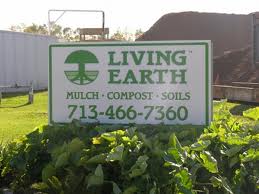
Living Earth is the largest manufacturer of compost, landscaping and mulch materials in  Texas.  The company was founded in 1985 as a single location in Houston, Texas and after a series of acquisitions, Living Earth has grown to 19 locations - 7 in the Dallas Ft Worth area and 9 the Houston area. 
The product line has expanded to include various types of flag stone, chopped rock, boulders, crushed and decomposed granite, limestone, paver base, Mexican beach pebbles, pea gravel, sand, and a large selection of specialty mixes for a variety of Texas soils.  
I recently had the opportunity to tour the Dallas location at 1901 California Crossing with one of the co-founders of Living Earth Technology, Paul Tomaso, and I was quite impressed with the size and scope of the operation.  Paul patiently toured my group around the entire yard and explained what each product was, where it came from, and how it was made.  

Coincidentally, I had researched compost and mulch options for a new flower bed that I created at my home a couple of months ago and happened to have  purchased a couple of yards of compost from Living Earth.  Now that the new planting bed has had a couple of months to get established, I can speak with some experience that a good compost has made a huge difference in the plants' size and shape as compared to an older garden bed that was not amended with Living Earth soil.  

Paul  explained that the specialty planting mix that I had used is made up of Texas Green Sand and Expanded Shale, and that combination helps promote drainage and over time breaks down the clay soil so common to our area.  Living Earth makes several specialty soils including one for Dallas and one for Houston.  The Dallas version has a “fine-textured sandy loam with fine compost added” to it, while the Houston version is of a heavier nature.  
If you are one who purchases your mulch or compost each year by the bag full you might be surprised to learn that you can drive over to your local Living Earth and purchase in bulk for less pound for pound.  The average price per cubic yard (about one bulldozer load) of compost or mulch is between $25-$40 depending on the mix.  If you still prefer the convenience of purchasing bags of mulch and compost for small jobs, you can purchase Living Earth products at  Albertson's and Kroger on a seasonal basis. 

The staff from Living Earth is very knowledgeable and helpful about the proper soil amendment for plants and area specific mixes.  If you have a do-it-yourself gardening project on the horizon, you might save yourself a lot of trouble by using the right dirt the first time.  I can certainly speak from experience about the disappointment of clearing, preparing and planting a new bed only to watch it die from poor drainage and less than optimal dirt.  

You can also feel good about buying from Texas based Living Earth because they recycle over 500,000 tons of green materials each year.  Through partnerships with local lawn services, municipalities, and several food manufactures, Living Earth diverts, recycles and reuses cut and pruned tree branches, yard brush, leaves, grass clippings, and pre consumer fruit and vegetable waste away from the landfill and returns it to an organic material used for beautifying our yards and green space.  
Living Earth locations
Products and Services

Friday, July 22, 2011

Michael Kawecki - Axiom Sustainable Consulting

Michael Kawecki offers a wealth of LEED services at Axiom Sustainable Consulting including LEED assessments, LEED project reviews, consulting agreements, public relations for changing policy at USGBC and GBCI, and a number of online and in-person education and training courses intended for building owners, building designers, construction personnel and those interested in pursuing a Green Associates or LEED AP credential.
At the Axiom website you will find webinars, resources with case studies, archived newsletters and much more.  The newsletter provides the reader with thought provoking articles related to LEED and sustainability.  In the most recent newsletter you can read about Wal-mart’s Move to Go Green, UPS’s Plastic Vehicle, the “Universal Recycling Label,” Axiom Webinars, LEED for Healthcare, and more.   You can sign up to receive the newsletter at www.axiomsustainble.com 
What is LEED?
LEED stands for Leadership in Energy and Environmental Design.  LEED is an internationally recognized point rating system developed by the USGBC and is divided into the following categories.

  • Sustainable Sites
  • Water Efficiency
  • Energy and Atmosphere
  • Materials and Resources
  • Indoor Environmental Quality 
  • Innovation and Design
  • Regional Priority
What is USGBC?
The United States Green Building Council is a non-profit that promotes sustainability in how buildings are designed, built, and operated. 
What is a LEED AP?
Since 2001, more than 130,000 building professionals have earned the LEED AP credential
This voluntary AP test demonstrates an individuals understanding of sustainable building design, construction and operations
About Axiom
USGBC
LEED Rating Systems
http://www.usgbc.org/DisplayPage.aspx?CategoryID=19